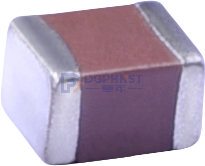
A detailed explanation of MLCC manufacturing principles, core parameters, and electrical characteristics, covering capacitance value, accuracy, voltage rating, and temperature characteristics, suitable for a variety of electronic devices.
The 0201-2225 full encapsulation X7R SMD capacitor capacity quick reference table includes capacity conversion, thickness specifications, and selection application guide, suitable for various electronic scenarios.
Analyzing the internal structures of capacitors, resistors, inductors, and other components to reveal their performance principles and application values.
The root causes of the shortage of five types of capacitors vary. The surge in demand driven by AI and new energy has reshaped the industry structure.
In basic components such as resistors, inductors, capacitors, and diodes, distinguishing polarity is a fundamental practical point in circuit welding, assembly, and debugging. It is also the most error-prone and fault-prone part, with significant differences in polarity characteristics among resistors, capacitors, and inductors.
A quick reference table for SMD capacitors, inductors, ferrite beads, and diodes, helping with circuit design selection.
Surging demand, shortage of high-end capacity, upstream material bottlenecks, and leading manufacturers controlling production... The entire supply chain is facing an imbalance in supply and demand!
Recently, the Jiangcheng Laboratory in Hubei has made a major breakthrough in capacitor key technology! It independently developed a three-dimensional multi-layer on-chip capacitor with a capacitance density exceeding 1000 nF/mm², specifically designed for high-end AI/GPU and high-performance processors to support the development of high-computing power, low-power chips.
Over the past decade, the MLCC (Multi-Layer Ceramic Capacitor) sector has experienced two drastic price hike cycles spanning 2017–2018 and 2020–2021 respectively.
Circuits we encounter daily may seem abstract and hard to understand — electric current is invisible and intangible, and the functions of resistors, capacitors and inductors are even more difficult to grasp intuitively. However, we can easily make sense of them by comparing an electric circuit to a waterdriven piping system.